Tag Archives: life

About 3930 Weeks (End of year reflections)

They say that, on average, the life span in the USA is about 4732 weeks. So here I am at about 83% of life. Really? In gas tank words I am running with a quarter of a tank, even sometimes it feels like running on reserve!

We don’t know what the future will bring, but we know one thing, for sure, we know that we are here and that we are doing the best we can. So, it is time for us to reflect on what has happened this year in our lives. We also know that there is nothing we can change about the past but reflecting on it, with a philosophical approach will help us to feel gratitude and generate the energy that we need to keep going.

Let me share my own personal experience in the hope that it will give you something more to reflect. At the end of last year, I was told that my position as Full Professor of Physical Science was going to be eliminated and that I was now to become Emeritus Professor. Which meant that I was not going to be hired to teach full-time. As I have been teaching full-time for over 26 years the news came as a surprise and produced a sense of deep loss. What was I supposed to do?

Christianity, and philosophy in general can give the answer to this question. Now that a door appears to be closing, hope allows one to feel that new doors will open. The situation is and has to be an opportunity for new actions, new projects, and endeavors. This is what I know had to happen. This is how you start thinking about dreams that you had. Dreams and ideas about business, travel, or enterprises.

And I had a dream.

An organization that would provide a safe space for youngsters and adults to develop social, and technical skills so necessary in today’s world. This dream came from years as a Boy Scout. I remember well the days when together with my friends we had a great time playing, exercising, planning the next camping trip, and learning. Developing life skills and friendships that last the whole life. (I am still in touch with some of my Scout friends!)

Based on this experience, and research about available programs we came to the following conclusion. The Science, Technology, Engineering, Arts, and Math (STEAM) Hub 4 Creativity, Innovation, Sustainability, and Stewardship (CISS) [STEAM Hub 4 CISS] will support young people with mentorship from older adults to become productive, responsible citizens that society needs and deserves. The Hub is a nonprofit corporation registered in Oregon and is a tax-exempt 501(c)(3) organization. So donations to The Hub are tax deductible.
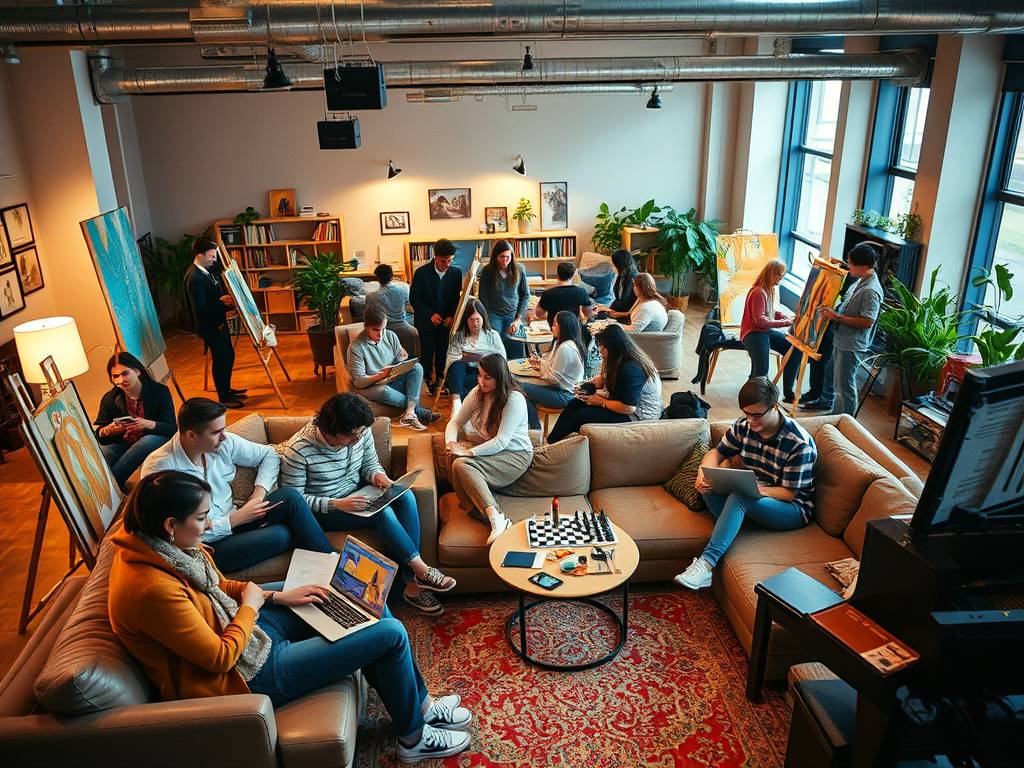
We are launching The Hub on January 31st, 2025. The first site will be hosted at Chemeketa College Woodburn Center, thanks to the unwavering support of Dean Elias Villegas. We will bring High School students to help them find their STEAM pathways which could mean a two-year/four-year college degree or training in trade skills that are very important in today’s world. For more information visit the website.

Meanwhile

Part of this year was also dedicated to my passion for learning. Supported by the Small Business Development Centers at Portland Community College I took two classes, one a 5 week on Business Design, and the other a 14 week on Business Builders. There I learn a lot about how to start, maintain, and grow a business. This also helped me to establish my own private practice. The STEAM Academy where I intend to tutor/mentor students thinking about going to college. This mentoring is intended to be on a one-on-one basis and will provide students more than just subject matter but a broad philosophy of a good life.

An important part of learning and growth is to read. Reading good books nurtures our intellect and spirit. Learning about the life of people who were productive while going through rough times, (think of Apostol Paul, and abolitionist Fredrick Douglas) gives us the gumption to continue (“Finding The Heart To Go On” – by Lynn Anderson based on the story of David) and the tools to do it. The best tools can be found in the reading of Stoic philosophers.

Then there is Latin.

Memento Mori. Thinking about death is the best tool when we are going through hard times. As we realize that our time here is limited and we shouldn’t waste it on petty and momentary distress. “One day I’m going to be dead,” a lady said on the phone when talking about something that she didn’t like, and that was the best way to not get upset about it.

Amor Fati. The love of fate. We should desire what is happening according to nature, so we are not disappointed when things happen that are not our desire. Yes, of course, we can hope for certain things but always remember that our will may not be what nature has in store for the future.

Carpe Diem. Live the moment. Hoy, this day, is what we have. The past is gone and the future is always out there. Many wise men have written about it. When we are going through hardship we need to remember where we are in the moment and realize how blessed we are.

Ouroboros (not Latin). The end is the beginning and the beginning is the end!

Finally.

Best wishes to all for the new year. It will be a challenging year as they always are so let’s get ready to support each other.

A Philosophy for Life

Let’s start by asking, what is a philosophy for life? Or, what is a life philosophy? Or, what is a philosophy of life? Grammar it seems is getting in the way of the real issue.

AI generated image of an ancient Greek philosopher.

According to dictionaries, a summary description of Philosophy can be stated as the search or study of reality. So in this context, we can have specific philosophies. Like philosophy of science, ethics-the philosophy of morals, logic-the philosophy of reason, et cetera.

If the idea is to have a good life, meaning healthy, productive, and happy, how should we live? How will we put into practice our knowledge of reality so we can have a good life? There are many psychologists dedicated to the study of happiness and many counselors and therapists that have developed techniques for helping people have a good life but mainly to solve the psychological issues that get in the way of people’s happiness and wellbeing. One might think that there is a need for deeper understanding of human nature. The good news is that we have information about studies done for more than 2000 years, beginning with the Greek philosophers, and there are very good resources, books and associations dedicated to the diffusion of these ideas.

One book that is highly recommended is by the philosopher William B. Irvine “A Guide to the Good Life”. In the title, you get the idea. Philosophy can provide practical information, which for many people today seems like a contradiction because in later years philosophy has been practiced in ivory tower academic institutions that brag to be non-practical. But for everyday citizens, mainly young people who are in the process of finding meaning in their lives, philosophy is the answer.

That is why we have to ask ourselves, as individuals, what is the philosophy that guides our lives.

What are the principles, moral and psychological, that when put in practice help us to live a good life.

Happy for no reason

It is common to be happy for a reason, your birthday, the birth of a child, seeing a loved one that you have not seen in a while, yes there are many reasons to be happy.

The questions is: why would you be happy for no reason?

The power that you have by being happy for no reason comes from the fact that being happy for no reason is up to you alone. When you are happy for a reason, the happiness will be dependent on that reason. Let’s say one is happy for a birthday, then the following day when it is not longer one’s birthday there is no reason to be happy. For some that would even be a reason for being unhappy!

Today is the day after my birthday, so I am happy for no reason. But wait! now that I think about it, I have many reasons to be happy. My family, my friends, my life! So starting with being happy for no reason I find the many reasons to be happy. So, there you go. Being happy for no reason is the door to happiness for many reasons.

I love Paradox, life itself is a paradox.

One of the problems I see in today’s society is the need for equivalence, and thus we create a bunch of false equivalences. For example what I just wrote about “Being happy for no reason” is not equivalent for “Being unhappy for no reason.” Happiness and Unhappiness are not equivalent opposites. Yes, of course, we could just change the previous paragraph from happy to unhappy but the meaning will not be the same.

The world is better when people are happy, it is obvious but then why is that we don’t recognize the need for more happiness and the need to be open and intentional about it? We need to do a better job spreading this idea. So far hate and war are leading the way in the news, bad news sells better that good news, it is an evolutionary effect on humanity. But we are now in the XXI century and good news need to drive the world.

Make yourself an agent of happiness. Let’s get together in this movement of happiness. Let the world wakeup to a new, better, reality of happiness for no reason.

The Subtle Art of Not Giving a F*ck

The best book I read this year was “The Subtle Art of Not Giving a Fu*ck” by Mark Manson. It was my favorite summer book. Later I saw a documentary with the same name featuring Mr. Manson, which is also highly recommended. It is in a way a book based on Stoic philosophy, without trying to be snobbish or academic.

Later I learned that the book has been quite popular even in a viral picture of esteemed US Congresswoman Ms. Katie Porter (D-California)

For years I have been a student of philosophy, first interested in Natural Philosophy for which I got a Ph. D. in 1982 at the Unversity of Newcastle U/Tyne, England. Those studies helped me be a scientist and work for the National Institute of Petroleum in Mexico where I ran a lab doing isotopic analysis for Geochronology. Measuring the age of rocks using the K/Ar method! In later years I have added metaphysical philosophy to include Stoicism to help me live a better life. Contrary to common belief, Stoicism is about the proper use of our emotions not as many think the elimination of our emotions, and control of our natural instincts that after human evolution have been a source of conflict in our lives.

One of the tenets of Stoic philosophy is “Memento Mori” (Remember Death) which is a reminder of our limited time on this Earth. For many thinking about death is depressing, but for me is uplifting because helps me have a broad perspective about life and things in general. One day I am going to be dead, then it will not matter. Others, my descendants, in particular, will continue with their lives having the same aspirations and struggles as the generations before. Sure, some things like technology have changed but the aspirations and the purposes have not. Human Nature is what has been since the beginning and will be until the end!

As it is in your own story, there are many stories and tales in my own that help me reflect on how many obstacles are there in each of our lives that are circumstantial and unavoidable but will always have a lesson that will improve who we are. Hopefully.

Let me write about one example. My grandfather’s grandfather, Geb Benson was shot to death in 1874 by a “neighbor” John Tuttle when my Great-great-grandfather was only 34 years old! His wife, my Great-great-grandmother, Irene was pregnant with her youngest child and had to go “back” to Iowa taking with her their other children, including my Great-grandmother Irene. Can you imagine the tragedy? How does a young mother have to endure such hardship and make ends meet to continue living and supporting her family? You may say: this is 2023 and it doesn’t matter what happened in 1874 but somehow, I tell myself, it does matter!

Memento Mori is a powerful tool to see and evaluate circumstances and provide the energy necessary to continue having a good life. One with inspiration and gratitude. After all the pursuit of happiness is the most important purpose in one’s life.

The Crisis of Trust

Rarely we see good news. It looks like news organizations, big and small, have found that only bad news sells. If you want to make money in the news business you need to convey bad, horrible news. The worst the better. So no wonder that today people, after years of this model, feel overwhelm and think that they can trust nobody.

Business, capitalism in particular was build on trust. People would make transactions based on a hand-shake or a simple document. I have seen (was back when I lived in Mexico) the transfer of a property written on the back of a wall calendar! Those were the days when polls had 60% or more of people trusting other people. I remember when in the times of videocassettes, Blockbusters will rent videos trusting customers to return them without the need to check the return, you would just slide it through an opening into some box. My library, as many others, allows you to return your books in the same way. This is because there is a basic understanding that we are borrowing/renting in good faith.

Funny how we use the word “faith” when talking about trust. Good faith is the basis of trust. But over the years we have been educated in doing things assuming that the other person in not acting in good faith. So business contracts include clauses that guarantee the transaction regardless of the good faith of those participating in the contract.

Looking at the dictionary the word faith is related to trust and confidence. Faith is complete trust and confidence in someone or something (Google/Oxford). For example: this restores faith in politicians. Also, faith is defined in relationship to a deity. For example: Faith is a strong believe in God or in the doctrines of a religion based on spiritual apprehension rather than proof. The latter part is fundamental because requires no proof. So, how can this faith can be created and nurtured? Over the years after George Fox in England and William Penn (Founder of Pennsylvania) in the USA, Quakers were know for their straight talk including having a “word”. Meaning that if someone said I give you my word it was an unbreakable promise. That word was the seal of contracts and made Quakers trustworthy and prosperous in their business. Until these days the symbol of a Quaker signifies quality. This can be said of other groups and organizations that have developed over the years a trade mark of trust.

It will be difficult and will take many years but we need to return to a society where trust, faith in each other and in institutions is widely spread. We we see our neighbors and others in our community like the good people they are. People that we can trust they are doing the right thing, that just like us a trying to do everything possible to make this world a better world. With that trust in hand we can then take the next step. We can work together!