Category Archives: Uncategorized

Past, Present, and Future of Reality

As a present from Scientific American I got a 2015 calendar. It is made with photographs from the Hubble space telescope. The one for January is a beautiful picture of a supernova remnant (0509-67.5) http://www.nasa.gov/mission_pages/hubble/science/supernova-source.html and shows an expanding ring or about 23 light-years in diameter.
Here is the thing: In the description it is mentioned that the super nova explosion took place 400 years ago and located in the Large Magellanic cloud at about 170,000 light years from Earth. I know my wife is always saying that I am not a guy that understand with few words. But it seems to me that the description is taking for granted that we are always making relativistic adjustments to time, because if light took 170,000 years to get here how come the explosion only occurred 400 years ago?
Remnant of Super Nova
I am not a perfectionist and will not try to be, but what has been bugging my mind is how difficult it is for us to have a conversation where time is involved without being careful of keeping track of the frame of reference.
So for me, the description should have stated that the supernova explosion occurred 400 years before, not 400 year ago.

Is this making any sense?

As we are trying to understand the ultimate reality, as in her recent book Amanda Gefter “Trespassing Einten’s Lawn” tries; we must be very careful with semantics, as our language is limited and our understanding is even more limited.
Amanda Gefter Continue reading

Analytical and Critical Thinking

Today we live in a fast paced society that requires of us responses to stimuli at a faster rate. Most decisions are taken based on past experiences and on prejudices. So it is the purpose of education to help us take steps based on information and knowledge that produces good results. The knowledge acquired during formal education is what in professional and trades constitute the context in which the individual performance is evaluated and rewarded. It is in these arenas that the development of so called “Difficult Concepts” is encountered.

In my experience the first problem we have is the definition of these difficult concepts. What constitutes the difficulty of a concept. Is it the nomenclature? The complexity? The simplicity? Or the depth of thought?

It is clear to me that we have to start with looking at the level of difficulty from the perspective of the level of the individual. What is the previous knowledge that the individual has when presented for the first time with the new concept? Is a question that has to be asked. What is the motivation to learn? As this motivation will give the individual the gumption to invest effort and time in the studying process. Finally, I think, there are external factors like the learning environment, and cultural bias that impede the learning of these concepts making them appear as difficult to the learner.

So the question is how can we identify which concepts are difficult, and evaluate the degree of difficulty. I have the feeling that answering this question will lead us into the development of analytical and critical thinking skills.

The Need for Skepticism

Reading Guy P. Harrison’s book “Think” is a truly enjoyable feat. I am reading it as I am reinforcing my perception that teaching is all about helping students to develop critical thinking with the tools to communicate and analyze difficult and complex concepts. In a way it doesn’t matter what the topic is or the subject matter everyone and all topics and subjects have to be taught by giving to the student the context that allows him/her to see the connection of these ideas with the lives of those developing the ideas. Including the cultural and semantic context in which the ideas are developed and the fact that the models proposed in this way will always have some imperfections. These imperfections are in any way making the models, hypothesis or theories unusable but have to be known in order to improve them. As we are in an ever changing world where development and progress is unstoppable we have to be aware of the fallacies embedded as to be careful to fix them or to not support new ideas based on these erroneous concepts.  There are many examples of this as when thinking about a flat earth people developed all sort of erroneous (some time poetical) models to describe its behavior like the one where elephants were standing on a turtle. For images of these ideas click here. Once a wrong idea is used to sustain more ideas is hard to be fixed. More so when they are supported by dogmatic interests and human powers that see changes in these ideas as threat to the status quo that benefits those in power.

The complexity and interconnectedness of models that explain reality is also the problem when we analyze the behavior of the individual.

At Warner Pacific College we have a senior capstone course within the general education core called “Humanities Senior Seminar” which leads students into a research project that explores the “paradoxical” nature of our humanity. This project is an excellent example of the way in which skepticism supports the students’ effort to analyze paradox in different contexts and with different relationships to their interests and “major.” This project has produced many remarkable papers. From analyzing the paradox of success through failure to the identification of unity in order from a disorderly origin. What all these papers have in common is the underlying skepticism of an inquisitive mind.

All these years that I have been reading these papers have given me a lot of satisfaction as I am witnessing the growth of these student. Some have told me that they have continued thinking about their project as it helped then have a better understanding of life.

It looks like the reason that skepticism has developed a bad name is because is a liberating attitude, not good in a repressive society. Will it be necessary to have an explicit course within the Liberal Arts called “Skepticism”?

Beware the Golden Future

You are making a great point that I relate to the fact that education is more that delivery of facts or content. Context, ethical and otherwise is also part of education!

classteaching's avatarClass Teaching

hover carAccording to TV programmes I watched as a boy in the 1970s, we should all now be getting around in hover cars, like the ones to the left.  In fact, this was due to be commonplace by the year 2000, I seem to recall.  I haven’t seen that many!  What we’ve done instead is quite sensible – take the basic design of a car and just tweak it, to make it better – more efficient, more comfortable, more environmentally friendly etc.  There are some parallels with education here.  We’ve been led to believe that all sorts of things were going to be the golden future of education e.g. brain gym, learning styles and of course google.  Why would we need teachers, when students can just plug in and google what they need to know?  Independent learning like this was seen as the way forward.  This was progress.  Like the hover…

View original post 1,344 more words

America Is Angry: What’s It Mean for Higher Ed and the Rest of Us?

Will anger be the energy generator that will lead the US to a new prosperity?

George Cornelius's avatarFinding My College

It’s easy to misread election results. After all, all politics are local. The reasons for voting Republican in West Virginia are different from the reasons in Colorado. Yet the results are indisputable: Republicans now will be firmly in control of the Congress. And I think the primary reason is that America is angry.

Wall Street and economic pundits tell us that things are getting better. The unemployment rate has slowly crawled off the high ledge where it was perched immediately after the financial collapse of 2008-09. The economy is growing, albeit slowly. The stock market has been on a tear. Things are improving, or so we’re told. But last night’s vote tells a different story. It tells the story of a troubled nation.

Personally, I don’t think most politicians (of either party), Wall Street power brokers or academic economists have any idea how hard it is for many Americans to…

View original post 872 more words

Incarnation and Cultural Engagement

Another very interesting and insightful blog by John Hawthorne

Incarnation and Cultural Engagement.


Sowing Seeds in September

This is the last day in August! School for me has already started I’m excited and ready for a new academic year. This blog sums it all for me.

classteaching's avatarClass Teaching

sowingLike most teachers, August is my favourite month.  No alarm clock, holiday adventures, lazy days, carefree, relaxation, friends, family etc.  September is inevitable though – and I quite like that too.  A new school year brings with it a fresh start.  An opportunity to try out new things and get new classes into good habits.  Which brings me on to the subject of growth mindset.  I’ve said before that I think this is a great idea – getting students to realise that success is the result of hard work, high expectations, effort and resilience is, in my mind, a winner.  However, it’s a big idea and if it’s going to have an impact in the classroom, it needs to be broken down into actions. This is the important point.  We often start September with the best intentions that often aren’t sustainable.  So they drift off.  With this in mind, whether you’re an…

View original post 1,495 more words

Quantum Field View of the World

Interconnectedness is opposed to the atomistic view of reality. When describing our world in ‘modern’ terms we articulate a view that is atomistic in the sense of separated entities that make a whole. Machinery made of parts that work together independently (parts that are replaceable) has been the metaphoric foundation of the industrial revolution as we consider our western modern society. It has been a good model that has allowed for an impressive advance of technology but has come to a need for renovation. Some would say there is a need for a revolutionary change of perspective. The new physics can guide us as it provides a new understanding of elementary relationships in how things are and work. The idea of a field from which “things” appear as some kind of precipitate by a stimulus or perturbation.

My friend Prof. Lou Foltz uses this metaphor for understanding our individual presence in the context of our society. Specially important when we are dealing with an educational context like in a college where students become (nurturing and finding themselves) as they relate to the community. The same can be said of those in charge of the educational process, faculty and staff.

Higher education is going through a deep transformation. Many aspects of the way colleges and universities are organized to provide the service needed by our society have to change and in some cases is changing. But in general institutions of higher education as other institutions in our society are slow and reactive to change. Most changes have been superficial, cosmetic and mainly related to the delivery of instruction, from night classes for adult learner, through asynchronous online, to guided inquiry and participatory education in the practice of ‘service” and “team” learning. This changes are for sure an advance to higher ed but lack the fundamental change that is necessary for a new society where the understanding of interconnectedness moves one to a collaborative and peaceful action to the solution of the problems we face today.

Think of the violence we are witnessing today. Labeled as ‘religious’, ‘ethnic’, ‘sectarian’, or ‘class’ warfare these conflicts represent a world view of separated-ness, where each group sees itself as different and disconnected from the other. We need to change this worldview!

In my classes I always talk about the connectedness of the topics we cover in class with our daily lives. I will not be different in my chemistry, physics, or environmental science classes. For example as we talk about ‘an element’ say carbon I move away from the ‘atomistic’ definition of carbon as the atom that has six protons giving it the ‘atomic number’ 6, instead I talk about carbon based on its properties, asking the question how does carbon relate to other elements. Getting to the following idea: if an atom ‘looks’ like carbon, ‘behaves’ like carbon, ‘relates’ to others like carbon, ‘bonds’ to others like carbon; then it is carbon. Later we can ask why we have these properties and get to the conclusion that having six protons will make it have six electrons and that will allow the electrons to be interchanged with other atoms giving it the properties that we observe.

Teaching in disciplinary silos has been the norm in higher education, this has to change, but how can we do it?

How can we develop curricula that is truly interdisciplinary since its conception?

How can we change the way we assess outcomes in a new interdisciplinary interconnected world?

How can we use standardized testing to make sure certain concepts are well understood and dominated while at the same time we don’t lose sight of the interconnectedness of these concepts?


 

Thinking About Mindset

As I’m reading Ellen J. Langer’s The Power Of Mindful Learning, this post really comes to the point of mindfulness in teaching.

classteaching's avatarClass Teaching

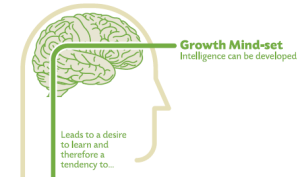
mindset brainIn a previous post, I stated why I think developing a growth mindset with students is so important.  It makes students:

  • Have high expectations of what they can achieve and be inspired by the success of others.
  • Accept that hard work and effort is needed to master new ideas and achieve excellence.
  • Accept that they need to be resilient and so keep going when things get tough.

Whilst it is obviously important to develop this culture with staff, through their teaching and interactions with students, if it’s going to be embedded across a school, we need to get students thinking about mindset.  By getting them to think about mindset, we will encourage them to reflect on themselves as learners and then hopefully change their approach to learning.  There’s no quick fix here, but I think there are opportunities all around us in schools, that can be exploited for this purpose.

View original post 786 more words

“Good” Doctors and Teachers (Part 2)

Education has been going through a deep change, this blog by Larry Cuban summarizes the basic ideas that help to understand the complexities in identifying what a “good” teacher is. It sure is a great read.

larrycuban's avatarLarry Cuban on School Reform and Classroom Practice

1. Has the definition of “good” teachers changed over time as has the one about “good” physicians?

2. Are there many different versions of “good” teaching as there were for “good” doctors?

3. Even with the differences in definitions over time and setting, are their core characteristics that transcend both as there were among “good” doctors?

4. Are “good” teachers dependent for success on their students, as doctors are on their patients?

The answer to each of the four questions is yes.

1. Has the definition of “good” teachers changed over time as has the one about “good” physicians? 

From the 1960s, researchers laid out the following personal traits and behaviors that “good” teachers exhibit:

[E]ffective teachers carefully monitor learning activities and are clear, accepting and supportive, equitable with students, and persistent in challenging and engaging them.

In the 1980s and 1990s, researcher findings added up to the following

View original post 1,004 more words