Loving it by having fun

What is the point of doing something, anything, if you are not having fun? Teaching has a lot of frustration, many obstacles, and challenges. But over all teaching has a lot of satisfactions. Once I had a T-shirt with the slogan: “I teach, I touch the future”; who can deny this is the reality of teaching? Regardless of what kind of teaching or what kind of students one have in the classroom, teaching is always about the future. But there can’t be a future without a ‘present’ that is vivid, strong, and unforgettable. Recently I was recommended to read a book by Simon Sinek about the ‘why’. Titled “Start with the Why’ Sinek points out the importance of knowing at a deep level of existence, why do we do what we do! What is the fundamental drive and purpose of our actions. So we can, with better understanding, analyze the ‘what’ and ‘how’ of the things we do, and actions we take to accomplish our goals.

Mission statements are in a way what institutions develop in order to articulate the ‘why’ of their existence. But unfortunately these mission statements can sound hollow and vain. Maybe because they are hollow and vain.

So how can we establish mission statements that truly allow the basic purpose of a person or institution to emerge and energize the life of the individual or the institution. Let me clarify that as institutions are made of individuals there must me a connection between the core intentions and purposes of the institution with that of the individual stakeholders of the institution. From employees to those served by the institution.

A second book is helping us understand how leadership follows after we know the why when leaders see that the only way institutions succeed is when the individuals within the organization pull together. And  in the “Happiness Advantage’ Shawn Achor emphatically articulate how this has to be done by happy people. Having fun is not an accessory is it core, central to any successful enterprise.

Many people are going to say that is ingenuous and disingenuous to say that one has to always be happy and have fun. That work should be hard and ugly by intrinsic nature and that if not then it is not true work.

Can you believe that even hard work can be fun?

Changing in the face of reality.

It is been a while since I wrote about change and time. During the summer I had the opportunity to read and heal after my total hip replacement. It was, I think, the best excuse I had to take the time to read.

There is one thing I can say about my hip surgery: it was great!

Everything happened according to plan, so now I am ready for the start of a new academic year. Ready to meet new students and to re-encounter with old students. My notebook is full of ideas developed during reading a broad spectrum of books and blogs, from environmental to political topics. The ones about spirituality like Deepak Chopra’s “The Future of God” had (I’m sure) the most impact. I will keep pondering about those ideas well beyond the next couple of months.

Outside of my health, one thing that happened that was not planned at all is that our “Friends” meeting (church) was released from the Northwest Yearly Meeting (NWYM). The NWYMis the umbrella organization that unites many Quaker meetings in the Northwest. The reason for the release is that our meeting decided some time ago to be welcoming to the LGBTQ community. As a core value of our religious convictions is that we all have in us the light of the Divine Spirit.

The process of expulsion has been complicated. Some other meetings have appealed and the administrative council of the NWYM is now thinking about how to proceed. We’ll soon find out.  In the mean time many manifestations of support have been received.

These two aspects of my life, hip and religion are telling be that reality manifest in many ways and that we have to change in order to move on. Some times is easy as is the case of dealing with a new situation having a new hip. But, many a times, some are not easy as when dealing with new personal relationships.

For the time been I know that we’ll be fine. In fact I think we’ll be better!

Did you faced changes in your life during the summer?

Common

It is very interesting to see how words change with time, or better to say how the meaning of word evolve in our society. Three books come to my mind as I think about the evolution of the word ‘socialism.’

In the book “The (Un)Common Good” Jim Wallis articulates how in politics some people have lost the idea of common good in a social context. Politicians have developed a language of ‘us’ versus ‘them’ that has damaged the political atmosphere and has stopped politicians from finding solutions to problems that transcend political parties. But the political posturing of politicians today blocks any effort to solve critical issues that are affecting us all regardless of political affiliation of geographic location, even having international implications well beyond our borders.

Jeffrey Sachs in his book “Common Wealth explain how in the face of an increase in population and an increase in the needs of  this increasing population we need to address the solution of todays’ environmental problems through an international collective endeavor. Sachs present a solid economic argument based on lots of data about the need for economic collaboration at international level. Sachs argues that it is only with agreement at the international level that future problems with the environment will be solved. My point here is that in order to have international agreement we first need to have national agreement. Something that appears far under the current political environment of un-common good explained by Wallis.

(For the full text click here.)

Finally Kropotkin in his book “Mutual Aid” written in 1902 clearly develops a historic explanation of how for most societies common good has been the driver of social evolution. The historic evolution of our society is based on the human nature of relationship. A basic characteristic of our human nature, a fundamental trait of our existence is the need for a collaborative subsistence. By ourselves individuals can’t subsist much less today when specialization is dominating societal activities. Not even in the old days at the beginning of civilization before agriculture when a bunch of savages lived by hunting and gathering. Even then, as it is seen today in the rest of the animal kingdom, life had to be within collaboration between and among groups of individuals. Kropotkin argues solidly against some who have misinterpreted Darwin’s idea of the survival of the fittest as an individualistic effort in favor of a sociological fitness based on intelligence. Fitness so defined is based on a broader view of circumstances, context, and environment.

We must realize that today is even more important to see the world as a unity where we will not succeed individually, even if our individual belongs to a strong small group of individuals. The word “socialist” related to the idea of common good, is today the example of how the meaning of words have change with the evolution of our society. For some socialist means anti-american, when in fact the United States of America was founded on the very idea of common good.

The word “United” says it all!

Knowledge organisers in science

For many years I have been teaching my students that the best way to ‘memorize’ something is to think about it, to understand it, and to practice with different approaches within the concept. This blog elaborates even further about the connection between thinking and memorizing.

classteaching's avatarClass Teaching

A few weeks ago I read this post by Joe Kirby on Knowledge Organisers.  It made a great deal of sense to me for 3 main reasons:

1.  It reminded me of how I learnt to spell – I’d learn the words, cover them up, write them out and then check my spellings.  This process was then repeated – and it worked.

2.  Students having to think about and recall knowledge, is going to make them remember it.  To quote Daniel Willingham:

willingham quote3. I teach science – a subject that requires students to be able to recall a great deal of knowledge.  What’s the point of teaching them how to structure a 6 mark extended writing answer, if they haven’t got the knowledge in the first place?  It’s like asking a builder to build a wall, without any bricks.

Knowledge organisers seemed to address all three of these points. …

View original post 574 more words

Making Questioning Count

The answer is in the question! So let’s ask the right question so we get, not the right answer, but the next right question!

classteaching's avatarClass Teaching

crane2The 15 minute forum tonight was led by PE NQT James Crane.  James started the session by telling us that since he had been teaching, he had quickly come to the conclusion that questioning was one of the most important aspects of pedagogy, and was essential to develop good learning.  It should be a  key feature of every lesson and is essential for judging how well students are understanding the work.  As such, it is a key planning tool – by asking good questions, you find out what they are struggling with and so which direction you need to take the lesson.  He also reflected on when it doesn’t go so well:

crane1

A scenario we will all be familiar with!

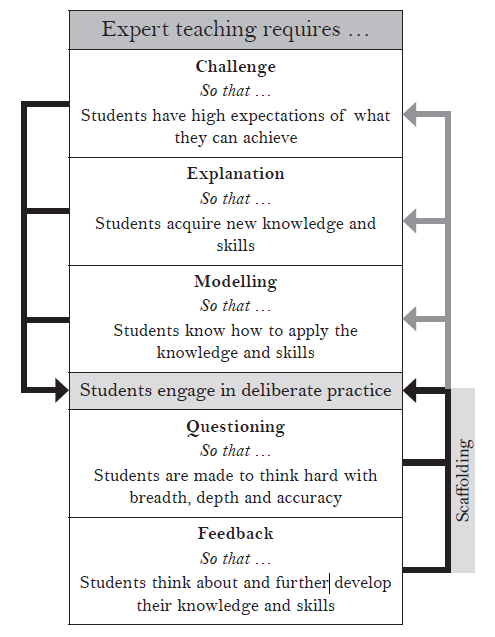
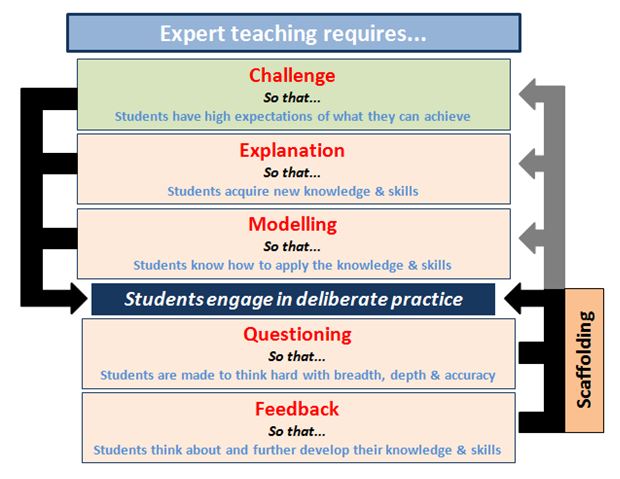
At DHS, questioning sits as one of our 6 key pedagogical principles:

6principles

The ‘so that…’ of questioning is key.  If done well, it makes sure that students are made to think hard, with…

View original post 727 more words

Educational And Economic Parity

As I read Naomi Klein’s book “This Changes Everything” and this blog by my dear friend Dr. Martin, I get the impression that we are arriving at a moment in history that will bring revolutionary changes to our society. In “The Promise of Paradox” Parker Palmer also stresses the fact that change is needed and that the change will bring a stronger sense of community, similar to what Jim Wallis is writing in his book “The (Un)Common Good.”
Do you sense a climate of optimism? I do!

docmartin1's avatarDOCMARTIN1: It's Business and Personal

I read two very interesting articles this morning that have caused me to think a bit about the enrollment challenges currently faced by academic institutions across the United States. In fact, there have been several articles written recently about the morphing of recruitment processes within elite and non-elite schools.

The University of Phoenix, which is a part of the Apollo Educational Group, still has an enrollment of 227,400 students, this is about one-half of what it once was. It is also down by 13.5% from last year at this time. In the financial section of to WSJ there were many reasons for this reduction, “glitches in online software,” problems with “recruiting and retention,” and greater (and deserved) regulation of processes. The University of Phoenix has had problems with recruitment processes that promise certain things, and with the support of struggling students. I would agree with today’s article that “Perhaps investors…

View original post 845 more words

Purposeful e-Learning

This blog has good links to technologies that are used in teaching, with great advice on how to use them.

classteaching's avatarClass Teaching

elearn

The 15 minute forum tonight was lead by Assistant Headteacher Pete Kelly.  Pete started the session with a question:

What happens when a teacher uses technology in a lesson?

The responses were varied:

  • Students are entertained but are not always learning effectively.
  • It depends on how effectively it is used?
  • It can enhance learning as it gives them extra support.

All of which are perfectly valid.  The key thing to ask is ‘what knowledge & skills do I want the students to learn?’  Followed by ‘how might technology help them with this?’   Unfortunately it’s often done the other way round, with technology being used for the sake of it – if it’s not going to be useful, don’t use it!

Questions that are often raised about using technology in school

  • How do we know they are not being distracted when using their smart phones etc?
  • How do we know…

View original post 692 more words

Life without lesson observation grades

Teaching can always be improved! The question is: how can we use class observation in the improvement? I also think that observing and being observed are ways to get useful information and there should be a regular custom to do this in every college and university.

This blog by Shaun Allison is an excellent example of ways to do it and not to do it. Hope you enjoy (and learn) reading it. I did!

Life without lesson observation grades.

How to Act in the Face of Despair?

Is this a despairing situation? Are we facing a hopeless future for human kind?

When we see all the destruction caused to our environment and see the apathy of powerful interests it is easy to despair and feel dishearten for the situation. But there is hope!

There is hope for many reasons, and for no reason at all. I am reading Roger Gottlieb’s book “A Spirituality of Resistance”

Spirituality of Resistance

Gottlieb’s profound ethical  view guides us through a labyrinth of questions and help us to get our own answers. This is why I am optimistic about the future: Every time we encounter challenges we find ways to overcome them and to come out of them stronger and better. The hard part is always to justify the victimization of innocents in the process. How can we justify the victimization of Jews during the Holocaust to say that now we know better thus making this a better world? There is no justification in my mind, as there is no justification of disappearing forests, endangered species, and natural wonders for humans to learn a lesson.

This is the message that I am bringing to our class “Earthkeeping” the HUM 212 course taught at Warner Pacific College every spring. Being this one of the elective courses required for the humanities sequence we have students from all walks of life in the pursue of different majors. This gives us the opportunity to address ethical behavior applied to many disciplines.

The questions I always ask then are: What am I supposed to do? How should I address the issue without despair? Is there a small action that I can do together with others in my community that will have a noticeable impact?

Supporting Learning Through Effective Revision Techniques

I’d like to reblog this because we are under constant pressure to reduce the time we spend teaching a particular subject.

classteaching's avatarClass Teaching

revdoc

The 15 minute forum tonight was led by yours truly.  As Y11 begin the final countdown from mock exams to the their final exams in the summer, Andy Tharby and I have been reviewing the resources and guidance that we give them, to support their revision.  Over the years this has accumulated into a large booklet full of revision ‘advice’.  The problem is that this booklet has become far too big and contains too many techniques and so ends up adding to their confusion!  Furthermore, many of the techniques are questionable.  So, we looked to the paper above (download here) to gain some clarity.

In the paper, Dunlosky et al identify the most effective techniques to support learning, that could be used for revision.  Before this though, they also identify some common revision techniques that have been shown to have very little effect on learning.

rev3

Three commonly used revision techniques…

View original post 755 more words